The Economics of Nuclear Power: Costs, Benefits, and Investment Trends
The economics of nuclear power have become a defining question for energy planners worldwide. After the 2022 Russian gas supply disruptions sent European natural gas prices soaring past €300/MWh, up from pre-crisis levels below €50/MWh, governments and utilities have been forced to reconsider every assumption about reliable, dispatchable electricity generation. With net-zero targets for 2035 to 2050 locking in across major economies and over 60% of the world’s 440 operational reactors built before 1990, the financial case for nuclear energy demands rigorous examination.
This analysis focuses on nuclear power plants as capital assets for electricity generation, comparing them directly with coal, natural gas plants, wind power, and solar PV. Nuclear technology stands apart from these alternatives in a fundamental way: it requires massive upfront investment but delivers decades of low-carbon, high-capacity factor output once operational. Understanding this trade-off is essential for anyone evaluating the relative costs of different generation technologies.
Two metrics frame the economics of nuclear energy: levelized cost of electricity (LCOE), which averages all lifetime costs per MWh generated, and total system costs, which incorporate grid integration, balancing, and reliability considerations. From TRX International’s perspective, robust project economics ultimately depend on securing experienced nuclear engineers, construction managers, safety specialists, and regulators. Workforce bottlenecks have inflated costs by 20 to 30 percent in recent Western projects, making recruitment strategy inseparable from financial planning.
Connect and Level Up Your Game
If you are interested in roles in nuclear space, reach out to the team at TRX International. We often have insights into upcoming outage needs and permanent staff positions before they hit the general job boards.
Assessing the Costs of Nuclear Power
Nuclear power costs divide into four primary components over a typical 60 to 80 year plant life: capital costs, operations and maintenance (O&M), fuel, and decommissioning. Unlike natural gas or coal plants, where fuel purchases dominate annual spending, nuclear economics are dominated by the massive upfront capital expenditure required to build the plant.
Here’s how each cost bucket affects nuclear economics:
- Capital Costs represent 50 to 70 percent of total lifetime costs. These include engineering, procurement, construction, licensing, and owner’s costs. Because nearly all capital is committed before a single MWh is generated, financing terms and construction schedules have outsized influence on final project economics.
- Operations and Maintenance account for 20 to 30 percent of total costs. Nuclear power’s operating costs are generally lower than those of coal and gas plants, with fuel costs typically accounting for only one-third to one-half of the total costs for coal-fired plants and one-quarter to one-fifth for gas plants.
- Fuel Costs represent just 10 to 20 percent of generation cost for nuclear. Uranium prices show far less volatility than gas or coal, providing budget predictability across decades.
- Decommissioning and Waste Disposal typically add 5 to 10 percent when viewed on a nominal basis. Decommissioning costs for nuclear power plants are estimated to be about 9 to 15 percent of the initial capital cost, but when discounted over the plant’s lifetime, they contribute only a few percent to the investment cost.
The levelized cost of electricity averages capital, fuel, O&M, and financing costs across all MWh a plant will generate. This allows direct comparison across technologies with different cost structures. However, LCOE alone does not capture the full picture. Government subsidies, carbon prices, and long-term power contracts can shift apparent economics substantially, as subsequent sections will explore.
Capital Costs and Construction Economics of Nuclear Plants
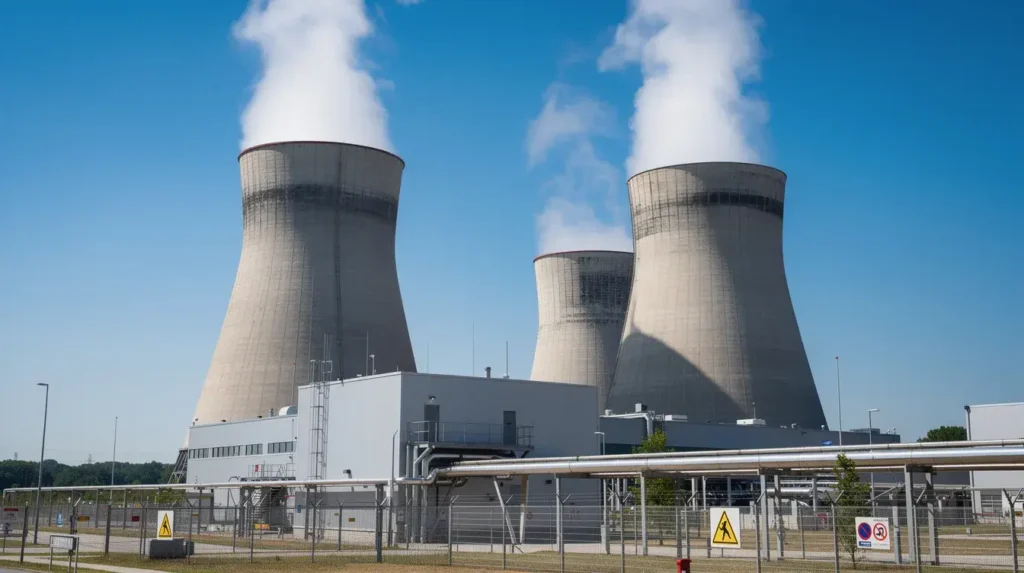
Capital costs for new nuclear power plant construction dwarf those of competing technologies. Understanding what drives these figures and what can reduce them is critical for anyone evaluating nuclear projects.
Nuclear capital costs include:
- Design and Licensing: Regulatory approval for reactor designs can cost $500 million to $1 billion per design per country. The U.S. NRC’s Design Certification for the AP1000 took five years and approximately $500 million; the UK’s Generic Design Assessment for the EPR cost £150 million over a similar period.
- Site Preparation and Civil Works: Foundation, containment structures, and auxiliary buildings.
- Nuclear island: The reactor pressure vessel, steam generators, and containment represent 40 to 50 percent of total capital expenditure.
- Conventional Island: Turbine hall and balance-of-plant equipment.
- Grid Connection and Owner’s Costs: Typically 15 to 20 percent of project total.
The 2020 edition of the OECD’s Projected Costs of Generating Electricity reported that overnight capital costs for nuclear power plants in OECD countries ranged from $2,157/kWe in South Korea to $6,920/kWe in Slovakia.
For context, the overnight capital cost of a nuclear power plant in the OECD rose from about $1,900/kWe at the end of the 1990s to $3,850/kWe in 2009, reflecting supply chain constraints and regulatory changes post-Three Mile Island and Chernobyl.
Real-world 2010s to 2020s projects illustrate the challenge:
- Olkiluoto 3 (Finland): Licensed in 2005, entered service in 2023 at €12.4 billion ($13.5 billion) or approximately €8,500/kWe, far exceeding the initial €3 billion estimate. Concrete quality issues and contractor disputes drove 14 years of delays.
- Flamanville 3 (France): Similar timeline, reaching €19.2 billion ($21 billion) or €11,700/kWe by 2024 due to forge cracking and design modifications.
- Vogtle 3 & 4 (USA): Completed in 2023 to 2024 at $35 billion total versus a $14 billion budget, with Westinghouse’s 2017 bankruptcy adding complexity. The construction of two new reactors at Plant Vogtle in Georgia supported up to 9,000 workers at peak construction and created 800 permanent jobs when the units came online.
Construction delays can add significantly to the cost of a nuclear power plant, as longer construction times lead to higher finance charges due to interest on debt incurred during the construction period. Modern nuclear power plants are typically planned for construction in five years or less, but historical projects have often taken over a decade, leading to significant cost increases due to prolonged financing periods.
In the United States, cost overruns on nuclear plants have contributed to the bankruptcies of several utility companies, which were exacerbated by construction delays and regulatory challenges.
The financing cost for nuclear power plants is particularly significant due to the long construction periods, which can lead to substantial interest charges on debt incurred during construction. The cost of capital is a key component of the overall capital cost of nuclear projects, and high costs can disproportionately increase capital expenditure, potentially undermining project viability. At 5 to 7 percent interest rates, interest during construction (IDC) can add $2,000 to $4,000/kWe to overnight costs.
Standardization and repeat builds dramatically improve economics. South Korea’s UAE Barakah APR-1400 program demonstrates this: Unit 1 cost $6.6 billion ($4,200/kWe, completed 2020), while Unit 4 achieved approximately 20 to 30 percent cost reduction through learning effects and supply chain maturation.
The regulatory environment for nuclear power is characterized by stringent safety requirements and complex licensing processes, which lengthen construction times. The primary barrier to nuclear expansion is the massive financial risk associated with construction.
Availability of skilled nuclear construction labor and project managers is a key driver of schedule risk, a reality that connects directly to specialized recruitment needs.

Plant Operating Costs: Fuel, O&M, and Decommissioning
Once a nuclear plant is operational, the cost profile shifts dramatically. Unlike natural gas plants where fuel purchases dominate annual spending, nuclear operating costs are dominated by staffing, maintenance, and regulatory compliance rather than reactor fuel.
Operating costs for nuclear power plants typically account for about two-thirds of total operating expenses, with fuel costs representing about 28 percent of these operating expenses. The U.S. fleet averaged $27/MWh in total O&M costs in 2023, compared with $40 to $60/MWh for gas plants including fuel volatility.
The nuclear fuel cycle comprises several stages, each contributing to the total fuel cost:
- Mining and milling: Uranium ore extraction at approximately $20 to $40 per pound U3O8.
- Conversion: Processing to uranium hexafluoride at $5 to $10 per SWU (Separative Work Unit).
- Enrichment: Increasing U-235 concentration to 3 to 5 percent, representing 7 to 10 percent of cycle cost at $100 to $150 per SWU.
- Fabrication: Manufacturing fuel assemblies at $200 to $400 per kgU.
- Spent fuel management: On-site storage and eventual disposal at $1 to $2 per MWh.
This fuel cycle structure means uranium price fluctuations have limited impact on generation cost. When European gas prices spiked 500 percent in 2022, nuclear fuel costs remained stable, a critical advantage for long-term planning.
O&M cost categories include:
- Staffing: Represents 40 to 50 percent of O&M budgets. Nuclear plants employ up to 800 workers each, earning salaries that are 50 percent higher than those in other generation sources.
- Inspections and Outages: Typically 10 to 20 percent of annual calendar time for refueling and maintenance.
- Component Replacements: Steam generator swaps cost $100 to $500 million every 20 years; other major components require periodic renewal.
- Safety Upgrades: Post-Fukushima FLEX strategies cost $50 to $100 million per plant.
- Security: Annual costs of $20 to $30 million per facility.
Decommissioning funds accumulate over decades through regulated contributions. U.S. NRC requirements mandate $500 to $800 million per 1 GW plant in segregated accounts. When spread across a plant’s lifetime output, waste disposal costs add just 0.1 to 0.5 cents per kWh to LCOE.
Skilled operations staff, maintenance engineers, radiation protection officers, and regulatory specialists represent a significant share of O&M costs. The aging U.S. nuclear workforce, with median age exceeding 50 years, creates succession planning challenges that affect both fixed operating costs and operational reliability.
Build Your Nuclear Dream Team
Every unfilled role is a missed deadline. Top nuclear talent is scarce and getting scarcer. TRX International sources pre-vetted specialists globally so your projects stay on schedule and fully compliant.
External and System Costs: Nuclear vs Fossil Fuels and Renewables
External costs capture health, climate, and environmental impacts not reflected in electricity prices. System costs include grid integration, balancing, reserves, and transmission investments. Both metrics matter for comparing nuclear with fossil fuel and renewable alternatives.
External costs associated with nuclear power, which are not included in the building and operation of power plants, are defined as those incurred in relation to health and the environment, and which are quantifiable but not built into the cost of electricity. A study commissioned by the European Commission in 2014 calculated external costs for nuclear energy to be between €18 and 22 per MWh, which included health impacts, accidents, and resource depletion.
The European Commission’s ExternE project estimated that the external costs of nuclear energy averaged 0.4 euro cents per kWh, which is comparable to hydro, while coal was over 4.0 euro cents per kWh. OECD Nuclear Energy Agency studies place nuclear external costs at $1 to $3 per MWh, versus coal at $40 to $100 per MWh and gas at $10 to $30 per MWh.
Key findings on external and system costs:
- Internalized Costs: Nuclear plants fund radioactive waste management and decommissioning through regulated reserves, reducing externalities compared with coal-fired plants that rely on atmospheric waste disposal.
- Climate Impacts: Nuclear emits less than 12 gCO2eq/kWh lifecycle versus 490 for gas and 820 for coal per IPCC medians, eliminating most climate-related external costs.
- Accident Risk: While Chernobyl ($200 to 500 billion global) and Fukushima ($150 to 200 billion) represent significant costs, accident probability is less than 0.01 percent reactor-year per IAEA data.
- System Costs: Nuclear’s 90 percent plus capacity factor incurs negligible balancing costs (less than $1 per MWh). The integration of intermittent renewable energy sources into the grid increases system costs significantly, which is not typically accounted for in LCOE comparisons, making nuclear power more competitive when these costs are considered. Wind and solar at 40 percent penetration can add $10 to $50 per MWh in backup, storage, and grid reinforcement needs.
When CO₂ prices in the EU Emissions Trading System or similar schemes exceed €50 to 100 per ton CO₂, nuclear electricity becomes significantly more competitive against unabated coal and gas. EU ETS prices reached €80 to 100 per ton in 2023 to 2025, fundamentally shifting relative costs.
Public perception, accident risk perception, and confidence in long-term spent fuel storage also affect the perceived cost of nuclear, even when not fully reflected in financial metrics. Some surveys suggest these factors add 1 to 2 cents per kWh to “social LCOE” estimates.
Electricity Markets, Subsidies, and the Levelised Cost of Nuclear Energy
Liberalized electricity markets favor low-marginal-cost renewables, challenging the traditional baseload economic model for large nuclear plants.
When wind and solar bid into markets at near-zero variable costs, wholesale prices compress and negative pricing episodes (e.g., -€500/MWh in 2023 Texas) can erode nuclear revenues despite 90 percent plus capacity factors.
The Levelized Cost of Electricity (LCOE) for nuclear power is estimated at around $110 per MWh for new advanced projects, according to EIA 2023 figures. Lazard’s estimates range higher at $141 to 222 per MWh for new nuclear. Typical 2020s LCOE ranges for comparison:
- New nuclear: $80 to 150 per MWh, highly dependent on construction success
- Gas CCGT: $40 to 80 per MWh, sensitive to fuel prices
- Onshore wind: $25 to 60 per MWh ($40 per MWh EIA reference)
- Solar PV: $25 to 60 per MWh ($55 per MWh EIA reference)
The LCOE for nuclear power varies significantly with the discount rate; it can be three times higher at a 10 percent discount rate compared to a 0 percent discount rate, while coal and gas show less sensitivity to changes in discount rates.
At a 3 percent discount rate, nuclear power is the lowest cost option for electricity generation in all countries, but at a 10 percent discount rate, its levelized cost of electricity can exceed that of coal and natural gas in some regions. This sensitivity reflects nuclear’s front-loaded capital expenditure.
Governments are introducing tax credits and subsidies to make new nuclear projects financially competitive and to address economic hurdles. Major support mechanisms include:
- U.S. Inflation Reduction Act: 30 percent investment tax credit plus $15 per MWh production tax credits for existing nuclear and new clean energy.
- State zero-emission credits: New York’s ZEC program at $17.50 per MWh has prevented premature closures of operating nuclear power plants like Ginna.
- UK Regulated Asset Base (RAB): In the UK, a regulated asset base model was adopted in 2022 for new nuclear projects, which allows for financing through a stable revenue stream during construction and operation, targeting £35 to 45 per MWh strike prices for Sizewell C.
- Contracts for Difference (CfDs): Guaranteed strike prices provide revenue certainty regardless of wholesale market fluctuations.
Capacity markets also support nuclear. PJM’s capacity payments of approximately $150 per kW-year help maintain economic viability for existing nuclear power plants that might otherwise face early retirement.
Some analysts argue nuclear receives disproportionate subsidies relative to its generation share, while others note parallel support for renewables exceeding $100 billion cumulatively in the U.S. Consistent carbon pricing would provide a more technology-neutral approach to valuing low-carbon generation.
Comparing the Economics of different forms of Electricity Generation
Each power generation technology presents a distinct economic profile across capital cost, operating cost, fuel risk, and system value. Understanding these differences helps explain when nuclear proves cost competitive.
Nuclear Power Plants:
- Very high capital costs ($5,000 to 12,000 per kWe for Gen III+)
- Low variable costs once operational (1 to 2 cents per kWh fuel plus O&M)
- 85 to 95 percent capacity factor for well-run plants
- Firm, dispatchable capacity with minimal integration costs
- 60 to 80 year operational life spreads capital cost
Natural Gas (CCGT):
- Modest capital cost ($800 to 1,200 per kWe)
- High fuel cost exposure (3 to 6 cents per kWh, volatile)
- 2 to 4 year construction timeline
- Flexible dispatch but carbon emissions liability
Coal Plants:
- Moderate capital cost but high operating costs (3 to 5 cents per kWh including emissions controls)
- Growing carbon cost exposure under ETS schemes
- Declining new construction globally
Wind Energy (Onshore Wind):
- Low capital cost ($1,200 to 1,800 per kWe)
- Near-zero fuel and low maintenance costs
- 25 to 45 percent capacity factor
- System costs rise with penetration (grid reinforcement, backup)
Solar PV:
- Lowest capital cost in favorable locations ($800 to 1,200 per kWe)
- 15 to 30 percent capacity factor depending on location
- Similar integration challenges as wind at high penetration
Nuclear energy can be competitive against fossil fuels when considering the social cost of carbon emissions. The 2022 European gas crisis demonstrated this: with spot gas exceeding €200 per MWh, nuclear’s €40 to 50 per MWh total cost made it the cheapest dispatchable option.
Real-world system comparisons illuminate these trade-offs:
France vs. Germany
France’s 70 percent nuclear grid delivers retail electricity at €0.10 to 0.12 per kWh with average emissions of 50 gCO2/kWh and 99.99 percent reliability. Germany, following its 2023 nuclear exit, pays €0.35 to 0.40 per kWh retail with 400 gCO2/kWh average emissions despite massive renewable deployment. This contrast highlights nuclear’s system value in providing firm capacity for energy security.
Studies that include reliability and grid stability benefits often find nuclear more cost-effective than pure LCOE comparisons suggest. However, falling renewable and storage costs continue reshaping this calculus, making regional factors and policy frameworks decisive.
Economic Performance of Existing Nuclear Plants
Most reactors operating today were built in earlier decades at lower construction costs, often $1,000 to 3,000 per kWe in inflation-adjusted terms, and now provide relatively low-cost electricity where markets allow them to run at high capacity factors. The U.S. fleet averaged $25 to 30 per MWh total generation cost in 2023.
Extending the operational life of existing reactors (Long-Term Operation) is one of the most cost-effective forms of low-carbon electricity. Nuclear plants are typically licensed to operate for 60 to 80 years, extending the period over which initial capital costs can be spread. The 2024 approval of Turkey Point’s extension to 80 years exemplifies how capital costs can be amortized to below 1 cent per kWh.
Despite strong technical performance, economic pressures have forced early closures:
- Low wholesale prices from subsidized renewables
- Cheap shale gas at $2 to 4 per MMBtu
- Market structures that do not value firm capacity
- State-level energy policy decisions
A study on the economic impact of the R.E. Ginna Nuclear Power Plant found that it generates an average annual economic output of over $350 million and employs about 700 people directly, with an additional 800 to 1,000 jobs created during maintenance outages. These impacts extend beyond the plant itself.
Case Study: Indian Point (New York)
The 2021 closure of Indian Point’s 2 GW generating capacity eliminated 1,500 jobs and approximately $1.5 billion per year in economic output. Replacement generation from natural gas increased regional CO₂ emissions by an estimated 15 million tons per year. The closure decision reflected state policy priorities rather than technical or safety concerns.
Case Study: Diablo Canyon (California)
Originally scheduled for 2025 closure, California reversed course in 2022, extending operations to 2030. This decision is projected to save consumers $3 billion in energy costs while retaining 1,200 jobs averaging $140,000 in annual compensation. The nuclear industry supports nearly half a million jobs in the United States, with domestic nuclear power plants employing up to 800 workers each, earning salaries that are 50 percent higher than those in other generation sources.
Case Study: Fessenheim (France)
France closed its oldest plant (1.8 GW) in 2020 despite good technical condition. The closure added approximately €0.02 per kWh to regional bills and increased emissions by 6 million tons CO₂ per year from replacement generation.
Staffing optimization, digitalization through digital twins, and life-extension upgrades are key tools to keep existing nuclear plants economically viable. These efforts require experienced operations and engineering personnel, creating sustained demand for specialized recruitment.
Financing Models for New Nuclear Power Plants
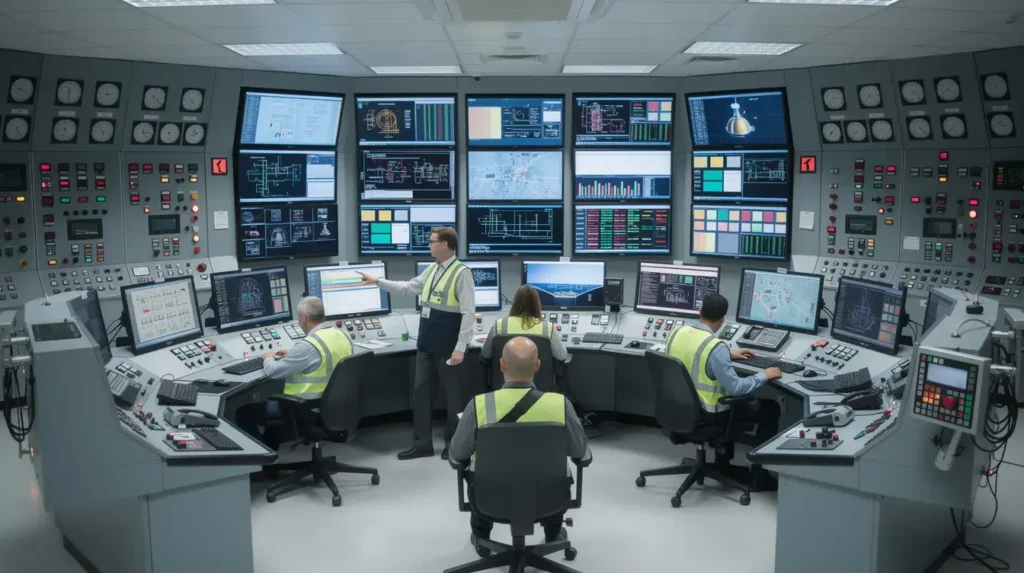
Access to low-cost, patient capital is often the deciding factor in whether new nuclear plants proceed. Unlike gas plants with 2 to 4 year construction and quick payback, nuclear requires 10 to 15 year investment horizons at 8 to 12 percent IRR hurdles.
Major financing approaches include:
- State-backed financing: China and Russia deploy state banks to finance domestic and export projects at preferential rates. China’s Tianwan units averaged $2.5 billion per unit with state financing.
- Utility balance-sheet financing: Southern Company and partners financed Vogtle 3 and 4 through regulated cost recovery, accepting construction risk in exchange for rate-base returns.
- Vendor financing: KEPCO’s UAE Barakah project bundled reactor supply with financing, spreading risk across the supply chain.
- Regulated Asset Base (RAB): In the UK, a regulated asset base model was adopted in 2022 for new nuclear projects, which allows for financing through a stable revenue stream during construction and operation. The RAB approach permits 5 to 10 percent capital recovery during construction via consumer bills, reducing developer risk.
- Build-own-operate (BOO): Russia’s Akkuyu project in Turkey ($20 billion) uses this model. Rosatom finances, builds, owns, and operates the plant, repaid through 25-year power purchase agreements at fixed prices.
Government support mechanisms:
- Loan guarantees: The U.S. DOE provided $18.5 billion in guarantees for Vogtle.
- Export credit agencies: Korea Eximbank and similar institutions de-risk international projects.
- Contracts for Difference: UK’s CfD for Hinkley Point C provides £92.50 per MWh indexed strike price.
Investor concerns, including construction risk (90 percent of Western projects face overruns), political risk, long payback periods, and public acceptance, require mitigation through strong governance and experienced project teams. Utilities with track records of on-time, on-budget delivery command better financing terms, directly linking workforce capability to financing costs.
Looking to hire nuclear professionals or explore nuclear career opportunities?
TRX International connects world-class talent with critical roles across the global nuclear industry. Visit trx-international.com or get in touch with the team to start the conversation.
Advanced Reactors, SMRs, and Fusion: Evolving Nuclear Economics
Small Modular Reactors (SMRs) are being developed to reduce initial investment and shorten construction times in nuclear projects. The basic SMR economic concept relies on several innovations:
- Smaller Unit Sizes: 50 to 300 MWe versus 1,000 plus MWe for conventional plants
- Factory Fabrication: Modules manufactured in controlled conditions, shipped to site
- Standardized Designs: Nth-of-a-kind cost reductions through mass production
- Phased Deployment: Build capacity incrementally, reducing upfront capital exposure
Leading SMR and advanced reactor programs:
- NuScale VOYGR (USA): 77 MWe modules targeting $5,300 per kWe FOAK, though the 2023 UAMPS project cancellation followed cost escalation to $9,300 per kWe. Design certification achieved.
- GE-Hitachi BWRX-300: Ontario Power Generation’s 2024 final investment decision targets $1 billion per unit, approximately $3,300 per kWe. Projects advancing in Poland and other markets.
- Rolls-Royce SMR (UK): 470 MWe design targeting £1.8 billion per GWe through factory production and standardization.
- X-energy Xe-100: High-temperature gas reactor for industrial heat and hydrogen production at $2 to 3 per kg hydrogen.
SMRs may prove particularly valuable for:
- Remote grids lacking transmission access
- Industrial sites requiring process heat
- Hydrogen production facilities
- District heating systems
- Data centers requiring reliable power
Fusion energy remains a longer-term prospect. ITER’s first plasma is targeted for 2035, while private ventures like Commonwealth Fusion Systems’ SPARC aim to demonstrate net energy gain by 2025 to 2026. Commercial deployment and bankable cost estimates remain post-2035 and highly uncertain, with FOAK capital costs potentially $20 to 50 billion per GW.
Advanced reactor and fusion deployment will require large numbers of specialized engineers, licensing experts, and construction professionals. NuScale alone estimates thousands of new nuclear-qualified workers needed for commercial-scale deployment, creating significant new hiring pressures across the nuclear industry.
Workforce, Skills, and Recruitment in Nuclear Economics
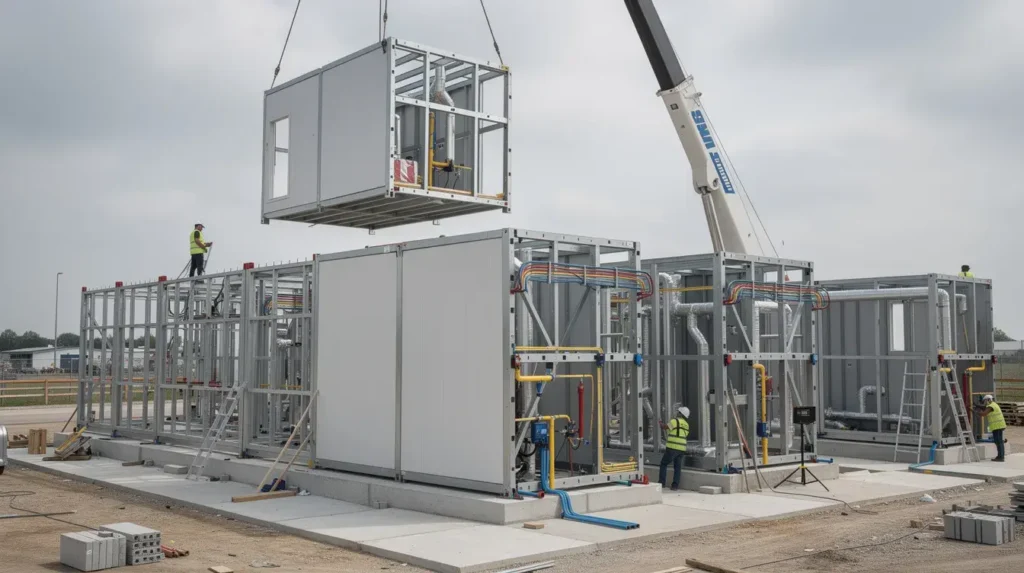
Economic outcomes of nuclear projects connect directly to the availability of skilled talent across the project lifecycle. Schedule delays, quality issues, and safety incidents all trace back to workforce capability, making human capital as strategically important as reactor technology or project financing.
Key roles influencing nuclear project economics:
- Nuclear Engineers: Design validation, safety analysis, licensing support (NQA-1 certifications required)
- Project Controls Specialists: Cost estimation, schedule management, earned value analysis
- QA/QC Inspectors: ASME III nuclear code compliance, welding inspection, materials testing
- Safety Case Authors: Licensing documentation, probabilistic risk assessment
- Radiation Protection Officers: ALARA programs, dosimetry, regulatory compliance
- Regulatory Affairs Experts: NRC, EUR, or national authority interface management
- Craft Labor: Nuclear-qualified welders (ASME N-stamp), pipefitters, electricians, civil constructors
Skill shortages directly impact project costs. Vogtle and Olkiluoto both faced limited supplies of nuclear-qualified welders, commissioning engineers, and construction supervisors, contributing to schedule extensions and cost overruns exceeding initial budgets by factors of two or more. The U.S. has fewer than 10,000 ASME N-stamp certified welders, creating a bottleneck for multiple simultaneous projects.
Medium- to long-term workforce challenges include:
- Aging Demographics: 50 percent of current nuclear workforce eligible for retirement by 2030
- Cross-sector Competition: Oil and gas, aerospace, and defense compete for similar skill sets, inflating wages 15 percent or more
- Training Pipeline Gaps: University nuclear engineering programs graduated fewer than 1,000 students annually in recent years
- SMR and Fusion Demand: New technology deployment requires 10 times current training capacity
TRX International supports utilities, SMR developers, fusion labs, and decommissioning organizations with targeted recruitment, workforce planning, and training support to de-risk project economics. Our global reach enables international mobility, transferring learning from successful projects in South Korea or the UAE to Western first-of-a-kind builds.
Diversity and regulatory familiarity provide economic advantages. Teams combining experience from multiple regulatory regimes can identify cost-effective compliance approaches, while diverse perspectives improve problem-solving during construction challenges. These factors ultimately determine whether nuclear projects deliver electricity at competitive rates.
Frequently Asked Questions
Why is nuclear power so expensive to build compared to other energy sources?
Nuclear plants require massive upfront capital, complex safety systems, lengthy construction timelines, and strict regulatory compliance. These factors push initial costs into billions, making financing risky and far higher than gas or renewables.
How does the levelized cost of nuclear electricity compare to renewables?
Nuclear’s LCOE typically ranges $130-200 per MWh for new builds, while utility-scale solar and onshore wind sit around $30-60 per MWh. However, nuclear delivers reliable baseload power.
Are Small Modular Reactors actually cheaper than traditional large nuclear plants?
SMRs promise lower upfront costs through factory fabrication and modular deployment. However, they currently lack commercial-scale validation, and per-megawatt economics remain uncertain until multiple units achieve real-world operational data.
Who typically funds the construction of new nuclear power plants today?
Funding usually combines government loan guarantees, utility equity, ratepayer-backed financing, and sovereign investment. Pure private financing is rare because long payback periods and regulatory risks deter most commercial lenders.
What happens to nuclear plant economics when decommissioning costs are included?
Decommissioning adds $500 million to $2 billion per reactor over decades. Operators fund this through dedicated trust funds built from electricity revenues, slightly raising lifetime generation costs but rarely making projects unviable.
Future Outlook: Conditions for Economically Viable Nuclear Power
Economic viability for new nuclear power generation requires alignment across capital cost control, stable policy, carbon pricing, and strong project teams. No single factor suffices. Success demands simultaneous optimization across all dimensions.
Nuclear is likely most attractive in scenarios featuring:
- High decarbonization ambition requiring firm capacity
- Limited domestic fossil resources or high fuel import dependence
- Constrained land availability for renewable deployment
- Premium on energy security and grid reliability
- Carbon prices exceeding €50 per ton CO₂
Remaining uncertainties include future cost trajectories of renewables and storage, commercial readiness of SMR and fusion technologies, and evolving regulatory frameworks. The next decade will test whether standardized designs and serial production can achieve the $3,000 to 5,000 per kWe targets that would make nuclear broadly cost competitive.
Actions for Energy Companies and Policymakers:
- Standardize reactor designs within and across markets to capture learning effects
- Invest in nuclear workforce development through apprenticeships, university partnerships, and training academies
- Align electricity market structures with reliability and decarbonization objectives
- Implement technology-neutral carbon pricing rather than technology-specific subsidies
- Support first-of-a-kind deployment while building supply chains for series production
Building economically successful nuclear plants will depend as much on people and skills as on technology and finance. At TRX International, we connect nuclear organizations with the specialized talent needed to deliver projects on schedule and budget because in nuclear economics, workforce capability is not a supporting factor but a determining one.