New Nuclear Construction Projects: 2026 Global Tracker
New nuclear construction projects are being driven by ambitious climate policies and soaring energy demands, especially from AI data centers requiring reliable and dispatchable power.
This article provides a comprehensive global outlook on new nuclear construction projects, explores key technologies such as advanced reactors and small modular reactors (SMRs), and examines the evolving workforce needs essential for project success.
The content is tailored for energy professionals, recruiters, and policymakers seeking to understand the latest trends, challenges, and opportunities in the nuclear sector.
The resurgence of new nuclear construction projects matters because it directly impacts energy security, job creation, and the achievement of climate goals.
As nations strive to decarbonize their energy systems and meet growing electricity demands, nuclear power is increasingly recognized as a critical component of a reliable, low-carbon energy mix.
The expansion of nuclear infrastructure not only strengthens national energy independence but also generates thousands of high-quality jobs and supports technological innovation.
Summarising the New Nuclear Construction Projects
New nuclear construction projects are experiencing a resurgence, driven by climate policies and increasing energy demands, particularly from AI data centers. As of early 2026, approximately 74 to 80 reactors are under construction globally, primarily in Asia, with a significant focus on advanced small modular reactors (SMRs) and life extensions for existing fleets.
After years of slow growth, the industry has reached a pivotal moment where new builds now outpace decommissioning, signaling a major shift toward innovation and Wyoming values in energy infrastructure.
With around 74 to 80 reactors under construction globally, led by China’s extensive fleet and key projects like TerraPower’s Natrium plant in Wyoming, these new nuclear construction projects are creating good paying jobs and strengthening energy security.
TRX International supports this dynamic sector by providing specialized recruitment and workforce solutions for utilities, SMR developers, and research organizations driving the next generation of nuclear innovation.
Global Pipeline of New Nuclear Reactors
The New Atomic Build-Out
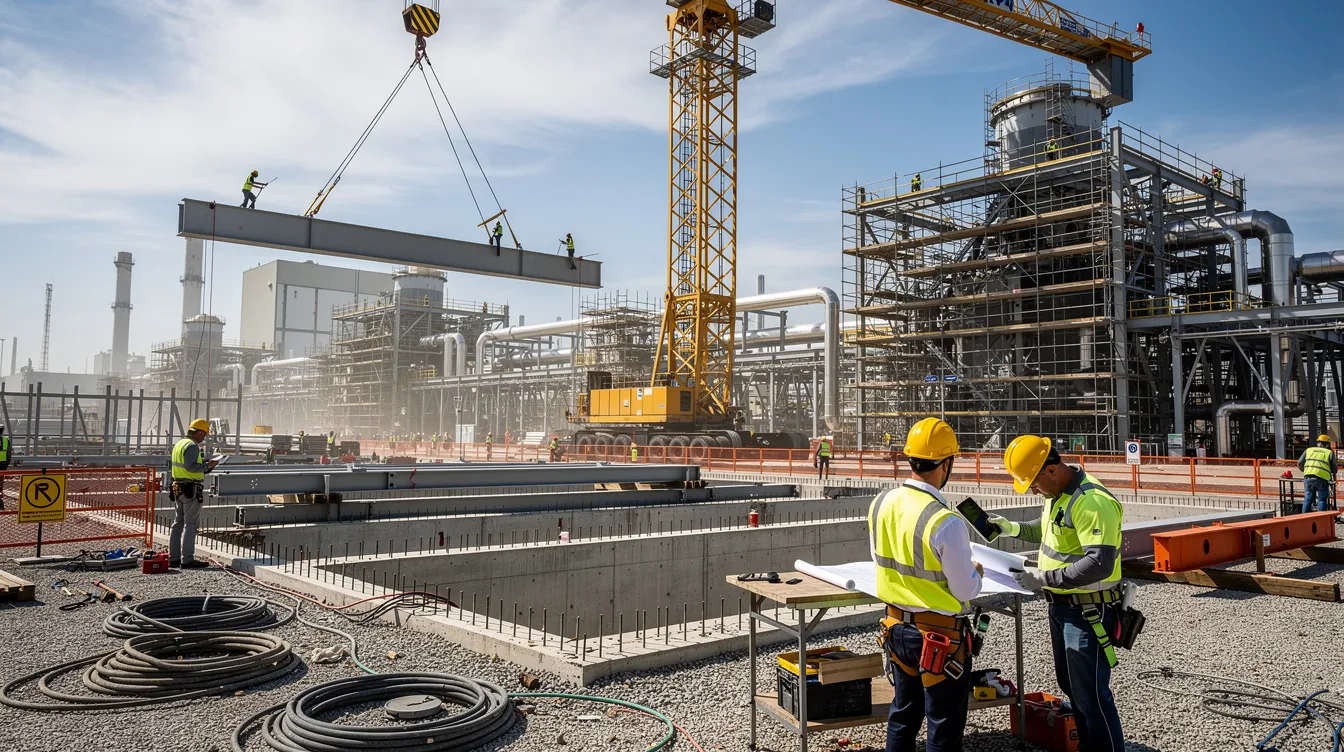
Construction cranes are back at reactor sites across four continents. A snapshot of the projects shaping the next decade of nuclear power — from gigawatt-class flagships to first-of-a-kind small modular reactors.
The global nuclear power market is projected to grow from $54.38 billion in 2025 to $57.43 billion in 2026, continuing expansion through 2030. Here’s the regional breakdown:
Region | Under Construction | Key Projects |
|---|---|---|
Asia-Pacific | ~50+ reactors | China’s Hualong One fleet, India’s Kakrapar units, Korea’s APR-1400 |
Europe | ~15 reactors | UK’s Hinkley Point C, France’s EPR2, Poland’s first plant |
Middle East | 8+ reactors | UAE’s Barakah 3 & 4, Turkey’s Akkuyu, Egypt’s El-Dabaa |
North America | 5+ reactors | U.S. advanced projects, Canada’s Darlington SMR |
In North America, Wyoming stands out as the country’s number one uranium producer, reinforcing its historical role in U.S. energy leadership and making it a prime location for advanced new nuclear construction projects that support American energy independence.
Asia-Pacific: The Largest Concentration of New Nuclear Construction
The Asia-Pacific region leads global nuclear construction with approximately 50+ reactors underway. China dominates with its extensive Hualong One fleet, a Generation III pressurized water reactor design that emphasizes safety and efficiency.
China leads global nuclear construction with about 37 reactors, including large-scale Hualong One units and small modular reactors (SMRs are designed to be more flexible and scalable compared to traditional nuclear reactors, allowing for deployment in a variety of settings, including remote locations.). India is advancing its nuclear capacity with units at the Kakrapar site, focusing on indigenous reactor technology to meet growing electricity demand.
South Korea’s APR-1400 reactors continue to expand the region’s nuclear footprint, combining advanced safety features with proven operational performance. This robust pipeline supports a diverse workforce need, from nuclear engineers to construction management, addressing the demands of both large-scale builds and emerging modular reactor projects.
This regional momentum sets the stage for similar advancements in Europe.
Connect and Level Up Your Game
If you are interested in roles in nuclear space, reach out to the team at TRX International. We often have insights into upcoming outage needs and permanent staff positions before they hit the general job boards.
Europe: Balancing New Builds with Fleet Extensions
Europe is constructing around 15 new reactors, anchored by flagship projects like the UK’s Hinkley Point C and France’s EPR2 program. Hinkley Point C features two 1.6 GWe EPR2 units designed to provide low-carbon electricity for decades, reinforcing the continent’s commitment to climate goals.
France’s EPR2 reactors represent a modernization of its nuclear fleet, with plans to deploy at least six units by 2038 to sustain its leadership in nuclear generation. Poland is entering the nuclear arena with its inaugural plant, partnering with Westinghouse and Bechtel to establish a foundation for future projects.
Hitachi nuclear energy technology is also emerging as a key component in developing next-generation nuclear energy systems in Europe, driving technological collaboration and innovation in advanced nuclear reactors. These developments highlight Europe’s focus on maintaining baseload power while integrating advanced nuclear technologies.
Europe’s balanced approach to new builds and fleet extensions demonstrates the region’s commitment to both innovation and energy security, paving the way for emerging nuclear markets in the Middle East.
Middle East: Emerging Nuclear Markets with Strategic Ambitions
The Middle East is home to 8+ reactors under construction, reflecting a strategic push towards energy diversification and security. The UAE’s Barakah plant exemplifies successful first-time nuclear construction, with Units 1 and 2 operational and Units 3 and 4 in advanced stages.
Turkey’s Akkuyu project is progressing towards operation in 2026, marking a significant milestone for regional nuclear capability. Egypt’s El-Dabaa plant, planned with four VVER reactors, aims for initial unit operation by 2028, signaling the country’s commitment to clean energy. These projects are creating thousands of jobs locally and require significant international collaboration to manage workforce training and regulatory compliance and evolving nuclear safety standards.
The Middle East’s rapid nuclear development highlights the importance of international partnerships and sets a precedent for innovation and advanced reactor deployment in North America.
North America: Innovation and Advanced Reactor Deployment
North America has 5+ reactors under construction, combining traditional large-scale builds with cutting-edge advanced reactor programs. The United States is advancing projects like TerraPower’s Natrium plant at Kemmerer, Wyoming, which began construction in 2026 and represents the first utility-scale advanced nuclear power plant in the country.
TerraPower, founded by Bill Gates, is recognized as a leading innovator in advanced nuclear energy, with Gates’s vision driving next-generation nuclear technology. Combining TerraPower’s reactor innovation with strategic partnerships and government collaborations is advancing American energy independence and economic growth. Oak Ridge National Laboratory is also a key partner in developing and testing innovative reactor technologies, supporting the progress of advanced reactor programs in the region.
Canada is progressing with the Darlington Small Modular Reactor (SMR) project, emphasizing modularity and scalability to complement its existing nuclear fleet. These initiatives focus on leveraging new technologies, such as molten salt energy storage and sodium-cooled fast reactors, to deliver reliable, low-carbon electricity. They also drive demand for specialized skills in advanced reactor design, regulatory navigation, and construction execution, including expertise in AI and robotics in the nuclear industry.
North America’s leadership in advanced reactor deployment and innovation is shaping the future of nuclear energy, influencing both established and emerging markets worldwide.
Build Your Nuclear Dream Team
Every unfilled role is a missed deadline. Top nuclear talent is scarce and getting scarcer. TRX International sources pre-vetted specialists globally so your projects stay on schedule and fully compliant.
Flagship New Build Projects in Established Nuclear Markets
Established nuclear countries are simultaneously extending existing fleets and building new reactors to maintain baseload low-carbon capacity. These projects require thousands of specialists across multiple disciplines.
United States: Vogtle Units 3 & 4 entered service in Georgia (2023–2024), representing america’s energy infrastructure achievements. The nuclear regulatory commission continues licensing work for next generation nuclear technology, including TerraPower’s natrium advanced reactor at Kemmerer, where Bechtel’s nuclear division serves as the EPC contractor, leveraging their industry-leading processes, digital tools, and project management expertise.
Europe: Hinkley Point C features two 1.6 GWe EPR2 units delivering carbon free power. France has committed to deploying at least six EPR2 reactors, with the first expected around 2038. Poland advances its first nuclear power plant with Westinghouse and Bechtel partnerships, benefiting from Bechtel’s nuclear expertise as an EPC contractor and their proven processes that utilize advanced digital tools for efficient project delivery.
Bechtel’s execution model, built on disciplined engineering, digital integration, and collaborative partnerships, is critical for ensuring efficient, safe, and scalable delivery of new nuclear construction projects.
Canada: Ontario Power Generation has cleared regulatory hurdles for a GE Vernova Small Modular Reactor at Darlington, making nuclear the backbone of provincial clean energy strategy.
These flagship projects drive demand for civil engineering, commissioning, QA/QC, and digital project delivery roles where TRX International typically supports recruitment across the world’s largest nuclear power plants.
Emerging Markets and New Nuclear Countries
Emerging economies view nuclear power as a route to clean energy, industrial growth, and energy independence. The construction of new nuclear power plants is expected to create thousands of domestic jobs, contributing significantly to local economies and reshaping the broader nuclear energy job market outlook.
The UAE’s Barakah plant serves as a template for successful first-time builder execution. Units 1 and 2 have commenced operation, with units 3 and 4 in advanced construction. This success has influenced nuclear interest across Saudi Arabia, Egypt, and Turkey.
Key newcomer programs include:
- Egypt’s El-Dabaa (four VVER reactors, first units by 2028)
- Turkey’s Akkuyu (operational in 2026)
- Ethiopia’s 2 × 1,200 MW reactors (2032–2034 target)
- Kenya’s 1,000 MW initial target with 20,000 MW ambitions by 2040
These markets face particular workforce challenges: limited local experience, rapid skills transfer requirements, and reliance on international staffing partners. TRX International helps build mixed local–expat teams and supports training pipelines for organizations entering nuclear for the first time, drawing on its experience in connecting talent with nuclear energy leaders.
Advanced Nuclear and Small Modular Reactors (SMRs)
Small modular reactors (SMRs) are a type of advanced nuclear reactor designed to be more flexible and scalable compared to traditional nuclear reactors, allowing for deployment in a variety of settings, including remote locations. Unlike gigawatt-scale plants, SMRs emphasize factory fabrication and lower upfront capital requirements.
SMRs can provide reliable, low-carbon energy and are expected to play a significant role in the future of nuclear energy by addressing the growing demand for clean power. The development of SMRs is part of a broader trend in the nuclear industry to innovate and improve nuclear reactor designs, focusing on safety, efficiency, and reduced construction times. The industry is also integrating environmental business practices, supporting both economic growth and environmental goals as part of nuclear power’s global comeback.
Leading programs include:
- NuScale’s VOYGR multi-unit concept
- Ontario Power Generation’s grid and Kemmerer unit initiatives
- GE Hitachi’s BWRX-300 and Rolls-Royce SMR designs
- Holtec’s SMR-160 and X-energy’s Xe-100 high-temperature gas-cooled reactor
Advanced reactors, such as those being developed under the ARDP, include designs that utilize molten salts and high-temperature gases, which can operate at higher temperatures and lower pressures compared to traditional reactors. These advanced nuclear systems, particularly the rise of small modular reactors and their workforce impact, are engineered to remain long powered, providing reliable energy solutions over extended operational lifespans.
Microreactors like BWX Technologies’ transportable units and Westinghouse’s eVinci target remote and industrial applications. The industry is delivering nuclear projects consistently, with a steady progression of advanced nuclear facilities supporting strategic energy infrastructure.
The U.S. Department of Energy’s Advanced Reactor Demonstration Program (ARDP) aims to accelerate the development of advanced reactor designs, with several projects expected to be operational within the next 14 years.
Looking to hire nuclear professionals or explore nuclear career opportunities?
TRX International connects world-class talent with critical roles across the global nuclear industry. Visit trx-international.com or get in touch with the team to start the conversation.
Kemmerer Unit 1 and the Natrium Advanced Reactor
TerraPower’s Natrium plant reached its official start of construction at Kemmerer Unit 1 on April 23, 2026, marking a historic milestone, Kemmerer marks the first utility-scale advanced nuclear power plant in the United States. This event followed the successful issuance of a construction permit by the U.S. Nuclear Regulatory Commission (NRC), a critical regulatory milestone that validated the project’s safety and readiness to proceed.
The construction of new nuclear power plants like Natrium is expected to create thousands of domestic jobs, significantly contributing to local economies and the overall U.S. economy. The project reflects Wyoming Governor Mark Gordon’s leadership and vision for innovation, as well as the strong support of Senator John Barrasso, both of whom have championed Wyoming’s role in energy and nuclear advancement.
The Natrium reactor features a 345 MW sodium-cooled fast reactor with an integrated molten salt-based energy storage system, enabling it to boost output to 500 MW when needed, enough to deliver reliable, dispatchable power for roughly 400,000 homes. The Natrium reactor is expected to be operational after a construction period that began in June 2024, when TerraPower broke ground on the greenfield site for non-nuclear support facilities.
The Natrium plant in Kemmerer, Wyoming, is projected to employ approximately 250 full-time staff once operational, in addition to the 1,600 workers mobilized for its construction. Bechtel serves as construction contractor, deploying Bechtel’s processes including the latest digital tools and modular construction approaches. This major milestone establishes a commercial blueprint for advanced nuclear projects nationwide and represents a future built on modern, reliable, and innovative energy infrastructure.
Jobs, Skills and Workforce Challenges in New Nuclear Construction
The nuclear construction industry is facing challenges such as financial risks, high upfront capital costs, supply chain bottlenecks, and long regulatory approval processes. Meanwhile, investments in advanced nuclear technology are anticipated to bolster energy security by providing reliable baseload power, which is critical for meeting energy demands.
Key Role Families
Key role families in demand span a broad future of careers in nuclear energy:
- Nuclear engineering (reactor, mechanical, electrical, I&C)
- Construction and project management
- Safety and regulatory compliance
- Radiation protection and quality assurance
- Commissioning specialists
Specialist Skills for Advanced Reactors
Advanced reactor projects require specialists in molten salt technology, sodium handling, TRISO fuel, and hybrid nuclear-renewable systems. The U.S. Department of Energy’s Advanced Reactor Demonstration Program (ARDP) aims to accelerate development, with several projects expected operational within 14 years.
The deputy assistant secretary at the DOE has publicly endorsed and promoted the advancement of new nuclear construction projects, emphasizing the importance of collaboration between public agencies and private industry. The DOE also aims for several advanced reactors to reach key licensing milestones, including Documented Safety Analysis approval.
Global Mobility and Diversity Challenges
Global mobility and diversity challenges compound recruitment complexity: cross-border licensing, security clearances, and local content requirements all constrain talent pipelines. Building more inclusive recruitment strategies remains essential for meeting industry demand and for professionals exploring pathways into nuclear consulting careers and opportunities.
Frequently Asked Questions
What makes TerraPower’s Natrium plant a breakthrough in nuclear energy?
The Natrium plant combines a sodium-cooled fast reactor with molten salt energy storage, enabling reliable, dispatchable power and boosting output to 500 MW when needed.
How does Bechtel contribute to new nuclear construction projects?
Bechtel provides engineering, procurement, and construction expertise using advanced project delivery systems to ensure execution certainty and consistent delivery of nuclear projects.
Why is Wyoming significant for the United States’ nuclear industry?
Wyoming is the country’s number one uranium producer and hosts the first Natrium plant, marking a new ground for American energy innovation and reliable energy production.
What workforce challenges do new nuclear construction projects face?
Challenges include supply chain bottlenecks, financial risks, regulatory approval delays, and the need for specialized skills in advanced reactor technologies.
How does TRX International support nuclear project delivery?
TRX International offers global recruitment, workforce planning, and training services, uniquely positioned to meet the talent needs of new nuclear construction projects consistently.
TRX International’s Role in Supporting New Nuclear Projects
TRX International works exclusively in nuclear energy and related sectors, supporting organizations across the full project lifecycle; from feasibility and licensing through construction, commissioning, and operations, and guiding professionals from student to specialist in nuclear careers.
Our services for new construction include:
- Large-scale project staffing and niche technical recruitment
- Executive and leadership search
- Long-term workforce planning for multi-unit nuclear projects
- Training and development for newcomer country workforces
- Competency frameworks aligned with safety and regulatory standards
We support nuclear power utilities, SMR developers, fusion research programs, nuclear medicine institutions, and decommissioning organizations worldwide. The U.S. Department of Energy aims for several advanced reactors to reach key licensing milestones, securing specialized talent now determines project success.