Nuclear Power Plants in Florida: Locations, Jobs & Who’s Hiring
When most people think of Florida, images of theme parks, endless coastlines, and retirement communities usually spring to mind. Yet, underneath the surface of the Sunshine State’s massive energy grid lies a powerful, reliable backbone: nuclear energy.
Florida is a fascinating case study in the US energy sector. It has a massive, growing population with intense energy demands (air conditioning is practically a life-support system here). To meet that demand without relying entirely on fossil fuels, nuclear power plays an absolutely critical role in the state’s energy mix.
For professionals in our industry, Florida offers a unique combination of stability, challenging technical work, and an enviable lifestyle. We aren’t just talking about jobs; we are talking about long-term careers in locations where you don’t have to shovel snow in the winter.
As a recruitment agency specializing in the nuclear sector here at TRX International, we see a constant demand for talent across the Florida peninsula. We often get asked about where these plants are, who runs them, and what kind of roles they are trying to fill.
This guide will walk you through the specifics of Nuclear power plants in Florida and clarify where the opportunities lie for engineers, technicians, and project support staff.
Connect and Level Up Your Game
If you are interested in roles at either Turkey Point or St. Lucie, reach out to the team at TRX International. We often have insights into upcoming outage needs and permanent staff positions before they hit the general job boards.
The Florida Nuclear Footprint
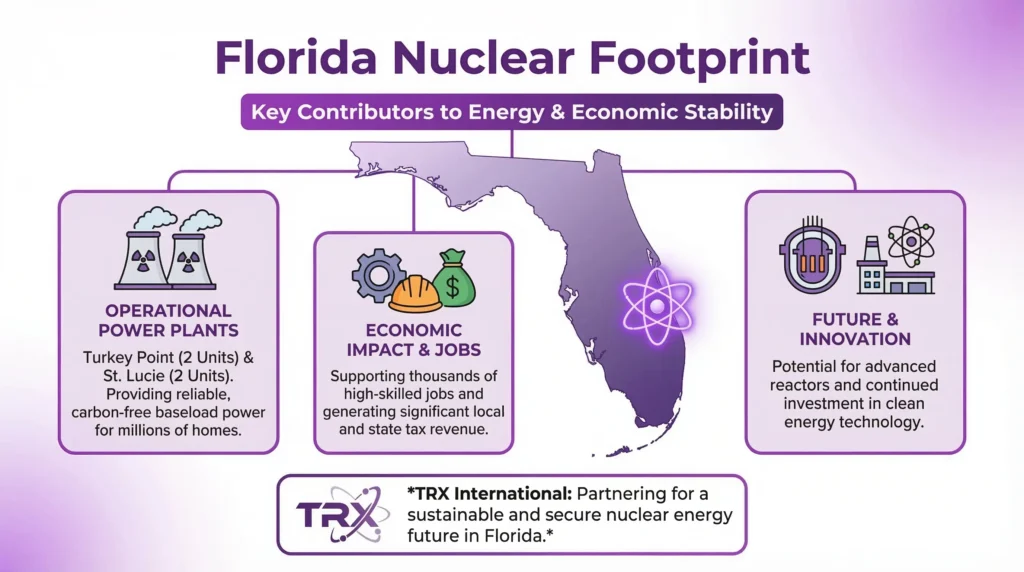
Florida currently gets a significant chunk of its electricity, around 12% to 15% depending on the year, from nuclear generation. While solar is growing rapidly in the state, nuclear provides the essential base-load power that keeps the lights on 24/7, regardless of the weather.
Currently, the state operates three active nuclear reactors at two major sites. There is also one major site undergoing decommissioning, which presents its own unique set of job opportunities.
People often forget that when the sun goes down or the wind stops blowing, these plants are still pushing out massive amounts of clean power. That kind of 24/7 operation requires a dedicated, highly skilled workforce, which translates directly into incredible job security for our technicians and engineers.
Understanding the difference between the operational side and the decommissioning side is vital when you are looking for your next role, as the skill sets required can differ significantly.
Here is a quick snapshot of the major sites in Florida:
| Plant Name | Location | Status | Operator | Reactor Type |
| Turkey Point | Homestead, FL (near Miami) | Operational (Units 3 & 4) | Florida Power & Light (NextEra Energy) | Pressurized Water Reactor (PWR) |
| St. Lucie | Jensen Beach, FL (Hutchinson Island) | Operational (Units 1 & 2) | Florida Power & Light (NextEra Energy) | Pressurized Water Reactor (PWR) |
| Crystal River | Crystal River, FL (Gulf Coast) | Decommissioning (Unit 3) | Duke Energy / Accelerant Solutions | Pressurized Water Reactor (PWR) |
Active Operations: Where the Action is?
The two operational power plants in Florida are both run by Florida Power & Light (FPL), which is a subsidiary of the massive energy company NextEra Energy. NextEra is a major player globally, known particularly for being the world’s largest generator of renewable energy from the wind and sun, but their nuclear fleet is equally impressive and vital to their portfolio.
Working for a company of this size often means good stability, structured career paths, and competitive benefits packages.
1. Turkey Point Nuclear Generating Station
Located down south near Homestead, Turkey Point is unique for a few reasons. It sits right on Biscayne Bay, just south of Miami. If you want a career in nuclear but also want access to a major metropolitan area with incredible cultural diversity and nightlife, this is your spot.
Turkey Point is a massive energy complex. It doesn’t just have the two nuclear units; it also has older oil/gas fired units and a newer combined-cycle natural gas plant on the same site.
From an engineering standpoint, Turkey Point is famous (or perhaps infamous depending on who you ask) for its cooling canal system. Instead of cooling towers, it uses a 5,900-acre network of canals to cool the plant’s circulating water. Managing this system, especially concerning salinity levels and interaction with the local environment, requires specialized engineering and environmental talent.
Who they hire?
Because of its size and complexity, Turkey Point has continuous needs. We frequently see demand for mechanical and electrical systems engineers, I&C technicians, and seasoned operations staff. The location near Miami can sometimes make it challenging to attract talent due to the cost of living, so candidates willing to relocate to South Florida are often highly valued.
2. St. Lucie Nuclear Power Plant
If the hustle of Miami isn’t your speed, the St. Lucie plant offers a different vibe. Located on Hutchinson Island roughly midway between West Palm Beach and Vero Beach, this plant sits on a barrier island between the Atlantic Ocean and the Indian River Lagoon. It’s a stunning location if you enjoy quieter beach living and fishing.
Like Turkey Point, St. Lucie operates two Pressurized Water Reactors (PWRs). The plant has a strong reputation for operational excellence. The community around Jensen Beach and Port St. Lucie is generally very supportive of the plant, viewing it as a major economic driver and a good neighbor.
Who they hire?
The technical needs here are very similar to Turkey Point. You see a steady demand for auxiliary operators, maintenance technicians, and various engineering disciplines (design, systems, and programs). The lifestyle here attracts families and those looking for a slightly slower pace than South Florida while still being on the coast.
The Decommissioning Sector: Crystal River Unit 3
Don’t make the mistake of thinking “shut down” means “no jobs.” The Crystal River Nuclear Plant, located on Florida’s Gulf Coast north of Tampa, permanently ceased operations in 2013. It was operated by Duke Energy.
While it no longer generates electricity, a nuclear plant cannot just be locked up and walked away from. It requires a massive, multi-decade process known as decommissioning to safely remove the spent fuel, dismantle the radioactive components, and restore the site.
Crystal River Unit 3 is currently undergoing an accelerated decommissioning process. This is a complex industrial demolition project in a radiological environment.
While Duke Energy still owns the asset, much of the actual work is often contracted out to specialized firms focused on nuclear decontamination and dismantling.
Who is hiring here?
The skill sets needed for decommissioning are different from operations. While they still need strong radiological protection (RP) technicians and health physicists, there is a much heavier emphasis on project management, waste management specialists, demolition experts, and civil/structural engineers.
The Major Employers in Florida Nuclear
When looking for jobs in this sector, you need to know who is actually signing the paychecks. It usually falls into three categories: the utility owner, major reactor vendors, and specialized staff augmentation firms.
- NextEra Energy / Florida Power & Light (FPL): As mentioned, they are the big dog in Florida nuclear. They operate both active plants. Getting a direct-hire position with FPL is often the goal for many in the industry due to benefits and long-term security. They hire for everything from entry-level engineering to senior plant leadership.
- Duke Energy: While their Florida nuclear generation is gone, they are still heavily involved in the management of the Crystal River decommissioning project.
- Major Vendors & Contractors: The utilities don’t do everything themselves. Especially during refueling outages (which happen roughly every 18 months for each unit), the workforce at a plant can double or triple temporarily. Companies like Westinghouse, Framatome, GE Hitachi, and major EPC (Engineering, Procurement, Construction) firms are constantly hiring for outage support, specialized engineering projects, and long-term contracts at these sites.
- Specialized Recruitment & Staffing Agencies: This is where TRX International fits in. Many utilities and vendors rely on agencies to find specialized talent quickly. We act as the bridge, helping nuclear professionals find the right fit—sometimes for a specific project, sometimes for a permanent career move.
Hot Jobs in the Florida Market Right Now
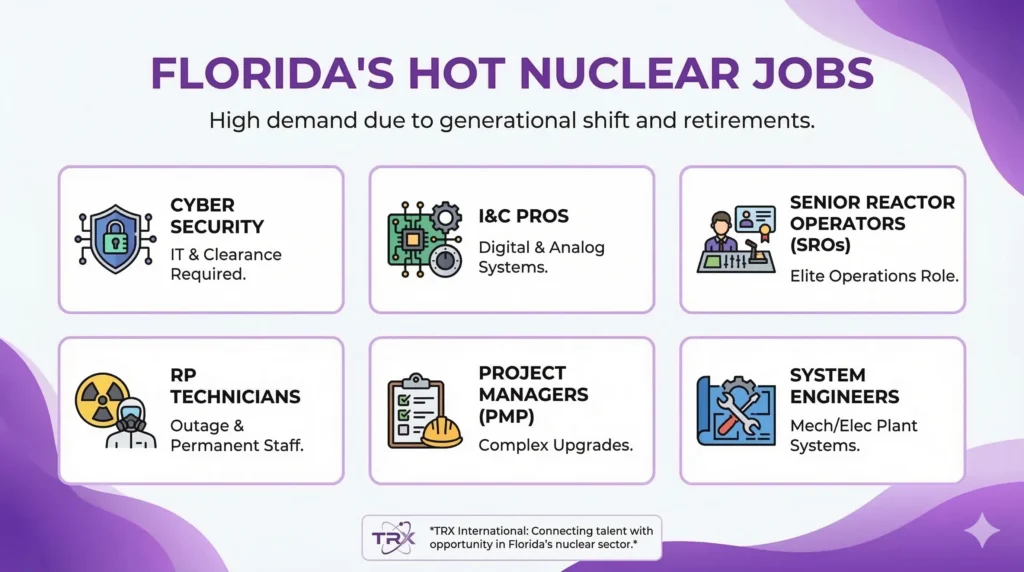
The demand for talent in Florida’s nuclear sector is robust. We are seeing a generational shift where many highly experienced workers are retiring, creating a vacuum that needs to be filled by mid-career professionals and sharp newcomers.
Here are some of the most in-demand roles we currently see in the Florida market:
- Cyber Security Specialists: This is a rapidly growing field within nuclear. Protecting critical digital assets at power plants is a top priority for regulators and utilities. If you have IT security experience and can obtain security clearance, your skills are highly transferable here.
- I&C (Instrumentation & Control) Technicians and Engineers: The nervous system of a nuclear plant depends on I&C. As plants upgrade analog systems to digital, people who understand both are incredibly valuable.
- Senior Reactor Operators (SROs) and candidates: This is the elite operations role. Utilities are almost always looking for qualified individuals to enter license training classes. It’s high pressure, high reward.
- Radiological Protection Technicians (RP Techs): Especially during outage season, the demand for good RP techs spikes massively. There is also a steady need for permanent staff in health physics departments.
- Project Managers (PMP): Nuclear plants are constantly running complex upgrade projects. Professionals who can manage scope, schedule, and budget in a highly regulated environment are essential.
- System Engineers (Mechanical/Electrical): The bread and butter of plant engineering. These engineers own specific plant systems and are responsible for their long-term health and performance.
Recruiter’s Advice on Getting Hired in Florida
Having placed many candidates in these roles, I can offer a few pieces of practical advice for those looking to break into the Florida market or move up within it.
The Clearance Factor
Working unescorted in a nuclear power plant requires passing an extensive background check to obtain unescorted access authorization. Past criminal behavior, issues with drugs or alcohol, or questionable financial history can be significant roadblocks. Be prepared for a deep dive into your past.
The Value of Navy Nuclear Experience
If you have a background in the U.S. Navy nuclear propulsion program, you are in high demand. The training and discipline from that program translate exceedingly well to commercial nuclear power. Florida employers love seeing this on a resume.
If you have a background in the Navy nuclear propulsion program, your resume immediately jumps to the top of the pile. The commercial sector loves the discipline and hands-on operational experience that former military personnel bring to the control room.
Résumé Specificity is Key
Don’t send a generic engineering resume. If you are applying for a Systems Engineering role at St. Lucie, tweak your resume to highlight experience relevant to PWRs or specific systems you know they use. Mentioning familiarity with relevant codes and standards (like ASME Section XI or IEEE standards) helps you stand out to hiring managers.
Consider the Lifestyle
Florida has no state income tax, which is an immediate boost to your take-home pay compared to many other states with nuclear plants. However, keep in mind factors like hurricane season and homeowners insurance costs in coastal areas. When interviewing, show that you have thought through the reality of living in Florida long-term.
Common Queries Related to Nuclear Power Plants in Florida
How many active nuclear plants does Florida have?
Florida currently operates two active nuclear power plants. These facilities consistently provide highly reliable, clean baseload energy for our entire state grid.
What are the most in-demand nuclear jobs in Florida?
Right now, we see a massive need for instrumentation technicians, cyber security specialists, mechanical system engineers, and highly trained radiological protection staff.
Do I need a clearance for a nuclear job?
Yes, securing unescorted access authorization is required. You must pass a strict background check covering criminal, financial, and employment history.
Who operates the active nuclear power plants in Florida?
Florida Power and Light operates both of the active plants. This major utility offers fantastic stability and excellent steady career growth.
Are there jobs at the closed Crystal River plant?
Absolutely. Decommissioning is a massive project requiring civil engineers, demolition experts, and waste management professionals to safely dismantle the facility.
Conclusion
Florida’s nuclear sector is vibrant, critical to the state’s economy, and hungry for talent. From the high-energy environment near Miami to the quieter coasts of Hutchinson Island, or even the unique challenges of decommissioning on the Gulf Coast, there are diverse opportunities available.
The industry here provides stable, high-paying careers in a state known for an attractive lifestyle. If you have the technical skills and the dedication required to work in this demanding field, Florida should definitely be on your radar.

Don’t try to manage your job search alone.
At TRX International, we speak nuclear. We know the hiring managers, we understand the technical requirements, and we know which sites are gearing up for major hiring pushes. If you are ready to explore nuclear opportunities in the Sunshine State, check our job listings or send us your resume today.
Let’s get your career moving in the right direction.